Karma, how does it work?

Karma means “activity” or “action.” The law of karma governs the reactions to our actions. It is a natural law of action and reaction that forms the basis of reincarnation, the process of being born again and again.

It is important to understand that all souls are inherently good. Therefore, when something unfortunate happens to someone, it does not mean that they were a bad person. Another important point is that karma is temporary. The circumstances we experience now will change in the future. This may happen within this lifetime, or it may occur in a future life. In addition, karma can be altered, and one can even cease to accumulate karma altogether by acting spiritually in service to God.

Good and Bad Karma

Positive karmic reactions may include things such as wealth, beauty, intelligence, and happiness. Negative reactions may include poverty, illness, and other forms of suffering. To fully understand how karma works, it is also helpful to understand reincarnation. You can read more about this on the page about reincarnation.

Karma—both good and bad—creates a continuous cycle of birth and death (samsara). This is a kind of vicious circle in which we become bound by our repeated actions and the reactions they produce. As long as we remain within this cycle, we naturally experience both happiness and distress.
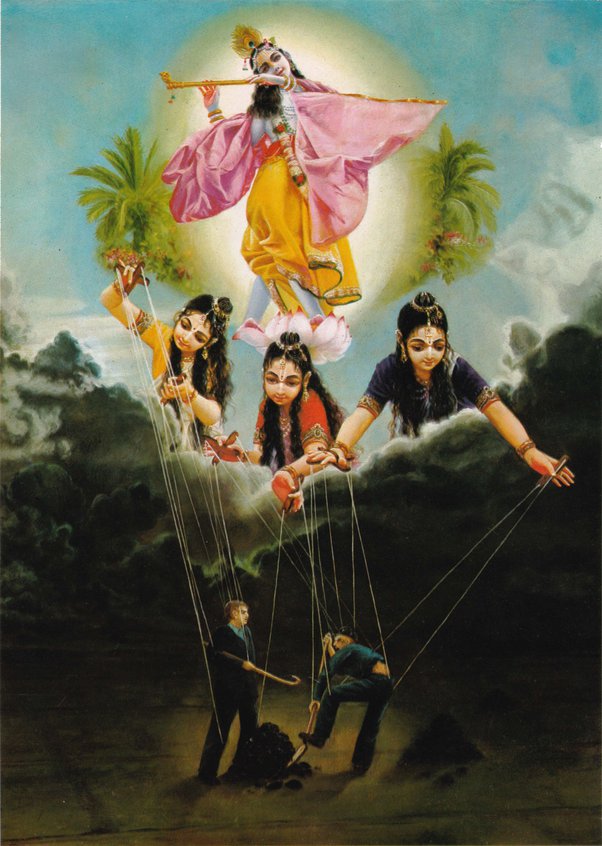
The philosophy of Krishna devotees explains how this cycle can be broken. By doing so, one attains a state of eternal happiness, or liberation, in a pure relationship with Krishna (God). You can learn more about this in Bhagavad-gita As It Is.From the spiritual perspective of eternity, it ultimately does not matter whether we possess “good” or “bad” karma. Material karma from the past can never prevent us from making spiritual progress.